
Watermelon number milestone flat lay
An overhead flat lay of your baby in a red onesie on a white bedsheet, with fresh watermelon wedges arranged beside them to spell the month number.
- Needs your baby’s photo
- flat lay
- overhead
- fruit
- props
- number
- summer
- minimal

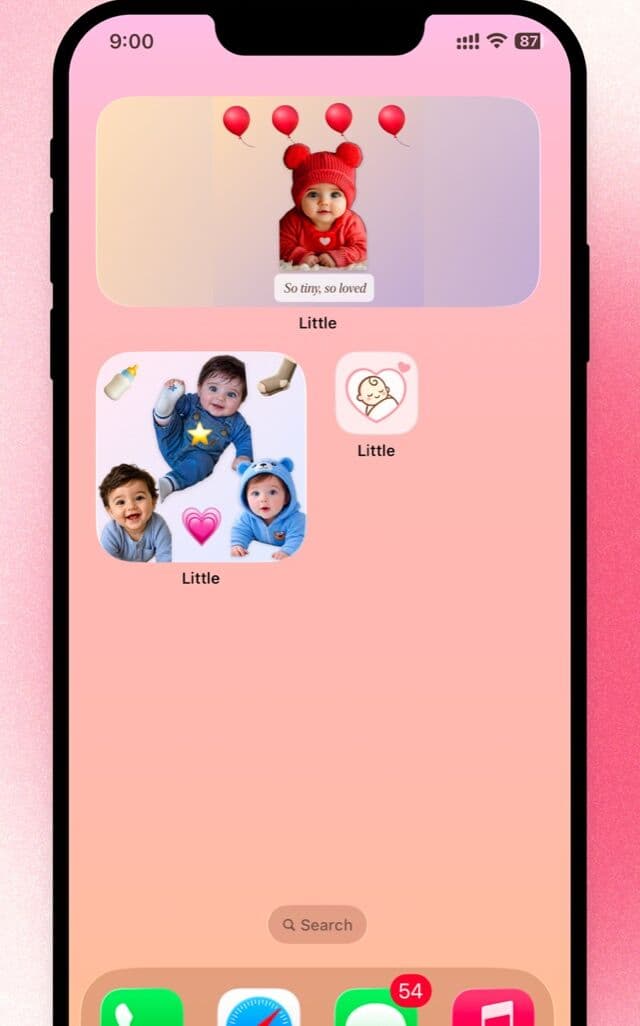
Keep it on your Home Screen
This watermelon mat, on your Home Screen for the whole of that month, instead of somewhere in a camera roll of twelve thousand.

Free to download · iPhone and iPad · Photos never leave your device
The prompt
Create an extremely realistic professional baby milestone photograph using the uploaded baby photograph as the ONLY image input.

IMPORTANT:
The uploaded baby photograph is used ONLY as the identity reference for the baby.

The uploaded baby must replace the baby in the described composition while preserving the baby's real identity, facial characteristics, natural proportions, and appearance.

Do not use the uploaded image as a general scene reference.

MILESTONE NUMBER: [NUMBER]

[NUMBER] represents the baby's [NUMBER]-month milestone.

==================================================
CORE PHOTOGRAPHIC CONCEPT
==================================================

Create a simple, authentic baby milestone photograph photographed from directly ABOVE.

The entire scene is arranged on a large real white bedsheet, white bed, or soft white padded photography surface.

The baby is lying naturally on their back on the white surface.

The watermelon milestone number is arranged beside the baby using REAL watermelon pieces.

The photograph should look like a real parent or family photographer physically arranged this setup and photographed it from above.

Keep the composition simple.

Do not add unnecessary props, decorations, furniture, graphics, text, or objects.

==================================================
COMPOSITION
==================================================

Use a square 1:1 photograph.

The camera is positioned almost directly above the entire setup, approximately 90 degrees overhead.

The baby occupies the LEFT side of the composition.

The watermelon milestone number occupies the RIGHT side.

The baby and watermelon should have a clear amount of white space between them.

Composition:

LEFT:
Baby lying on the white surface.

RIGHT:
Watermelon pieces forming [NUMBER].

The baby should occupy approximately one-third to two-fifths of the image width.

The watermelon number should occupy a similar visual area on the right side.

The composition should feel balanced but naturally imperfect.

Do NOT center the baby.

Do NOT create a conventional portrait.

Do NOT create a standing baby.

Do NOT create a sitting baby.

Do NOT photograph the scene from the side.

==================================================
BABY POSITION
==================================================

Place the baby naturally on their back on the white surface.

The baby's head should be toward the upper-left/middle-left portion of the frame.

The baby's body extends toward the lower-left portion.

The baby's entire body should be visible from head to feet.

The baby should have a relaxed natural infant pose.

Arms and legs should be naturally positioned with slight bends.

The baby's head may be turned slightly toward one side.

The expression should be natural and candid — calm, curious, peaceful, or gently attentive.

Do not force an exaggerated smile.

The baby should look genuinely comfortable lying on the soft surface.

Maintain completely realistic infant anatomy.

Hands, fingers, arms, legs and feet must be anatomically correct.

==================================================
BABY IDENTITY
==================================================

Use the uploaded baby photograph as the exact identity reference.

The generated baby must clearly be the same baby from the uploaded photograph.

Preserve the baby's real:

- face shape
- forehead
- eyes
- eye spacing
- eyebrows
- nose
- mouth
- lips
- cheeks
- chin
- ears
- skin tone
- hair color
- hair texture
- hairline
- natural facial proportions

Do not turn the baby into a generic AI baby.

Do not change the baby's recognizable identity.

Do not beautify or redesign the face.

Do not artificially enlarge the eyes.

Do not alter facial proportions.

Do not make the face perfectly symmetrical.

Preserve natural baby characteristics and subtle imperfections.

Keep realistic natural skin texture.

==================================================
CLOTHING — REQUIRED RED OUTFIT
==================================================

The baby MUST be wearing a simple, realistic RED baby bodysuit/onesie.

The outfit must be clearly and predominantly RED.

Use a natural rich red fabric similar to a real baby's cotton or jersey bodysuit.

The outfit should be simple and minimal:

- solid red color
- short sleeves
- comfortable baby fit
- realistic cotton/jersey texture
- natural seams
- natural folds
- subtle fabric wrinkles
- realistic stitching
- realistic fabric shadows

Do NOT use blue clothing.

Do NOT use denim.

Do NOT use yellow clothing.

Do NOT use patterned clothing.

Do NOT use multiple clothing colors.

Do NOT add text.

Do NOT add logos.

Do NOT add graphics.

Do NOT add decorative designs.

The red outfit should be clearly visible and remain one of the main visual elements of the photograph.

The red fabric must look like real dyed fabric under natural daylight, not an unnaturally saturated digital color.

The clothing must fit the uploaded baby's actual body naturally.

The fabric should react naturally to the baby's position on the bedsheet.

==================================================
WATERMELON MILESTONE NUMBER
==================================================

THIS IS THE PRIMARY MILESTONE ELEMENT.

On the RIGHT side of the baby, arrange REAL FRESH WATERMELON PIECES to form the exact shape of:

[NUMBER]

The number must be created entirely by physically arranging individual watermelon wedges/pieces.

For example:

If [NUMBER] = 3:

Arrange watermelon wedges so that they clearly form the number 3.

If [NUMBER] = 4:

Arrange watermelon wedges so that they clearly form the number 4.

If [NUMBER] = 6:

Arrange watermelon wedges so that they clearly form the number 6.

The watermelon pieces themselves create the number.

DO NOT use printed text.

DO NOT use digital text.

DO NOT overlay a number.

DO NOT write the number on the bedsheet.

DO NOT use a balloon.

DO NOT use a mug.

DO NOT use wooden numbers.

DO NOT use plastic numbers.

DO NOT use toy numbers.

DO NOT use a graphic representation of the number.

The milestone number must exist entirely through the physical arrangement of real watermelon pieces.

==================================================
WATERMELON APPEARANCE
==================================================

Use real fresh watermelon.

Each watermelon piece must have realistic:

- red flesh
- natural black seeds
- pale green/white rind transition
- dark green outer rind
- natural moisture
- subtle juice
- fibrous fruit texture
- naturally uneven edges
- small natural imperfections

The watermelon should look freshly cut.

Do not make the watermelon look plastic.

Do not make every watermelon piece identical.

Each slice should have slightly different dimensions, shape, seed placement and texture.

The fruit should have realistic moisture without looking artificially glossy.

==================================================
WATERMELON ARRANGEMENT
==================================================

Use approximately 10–16 individual watermelon wedges/pieces depending on the complexity of [NUMBER].

Arrange the pieces so that [NUMBER] is immediately recognizable.

The pieces should be slightly separated from one another.

Small gaps of white bedsheet should remain visible between individual pieces.

The watermelon pieces lie directly on the same white surface as the baby.

Do not make them float.

Do not stack them unnaturally.

Do not connect them with invisible lines.

The number should be recognizable purely from the physical arrangement of the watermelon pieces.

The watermelon number should occupy the RIGHT half of the photograph.

==================================================
WHITE BEDSHEET / SURFACE
==================================================

The entire scene is placed on a real white or slightly off-white bedsheet.

The bedsheet fills the entire frame edge-to-edge.

It should look like actual cotton fabric.

Include subtle natural:

- wrinkles
- folds
- fabric texture
- unevenness
- compression

The baby's body should create subtle compression where it touches the sheet.

The watermelon pieces should create subtle contact shadows.

The sheet should NOT look like a perfectly generated white background.

It should look like a real bed photographed from directly above.

There must be:

NO visible floor.

NO carpet.

NO furniture.

NO wall.

NO horizon.

NO wall-floor boundary.

NO room interior.

==================================================
LIGHTING
==================================================

Use soft, diffuse natural daylight coming from a nearby window.

The lighting should resemble a real photograph taken inside a home during daytime.

Use soft but naturally uneven shadows.

The baby and watermelon should be illuminated by the same physical light source.

The watermelon pieces should cast subtle soft shadows onto the bedsheet.

The baby should create realistic contact shadows and subtle sheet compression.

The red clothing should respond naturally to the daylight.

Do not use dramatic studio lighting.

Do not use cinematic lighting.

Do not add artificial glow.

Do not create perfectly uniform lighting.

==================================================
CAMERA
==================================================

Photograph the complete setup from directly overhead.

Approximately 90-degree top-down viewpoint.

Use a realistic modern smartphone or full-frame family camera appearance.

Use a natural moderate focal length.

Avoid extreme wide-angle distortion.

Avoid exaggerated perspective.

Avoid dramatic depth effects.

The entire baby and entire watermelon number should remain naturally visible.

Use realistic exposure and natural white balance.

==================================================
AUTHENTIC REAL PHOTOGRAPHY
==================================================

The most important requirement is that the final image looks like a REAL photograph.

It should look as though an actual baby was placed on a real white bedsheet and photographed from above with a real camera.

Prioritize authentic photographic rendering over perfection.

Include subtle characteristics of a genuine camera photograph:

- slight natural exposure variation
- subtle lens softness
- mild natural digital noise
- realistic camera sharpening
- natural skin texture
- individual baby hairs
- tiny skin imperfections
- realistic fabric texture
- natural sheet wrinkles
- uneven watermelon surfaces
- realistic watermelon moisture
- naturally imperfect shadows
- slight variations between objects

The image should NOT be unnaturally crisp everywhere.

The image should NOT look like a luxury commercial advertisement.

The image should NOT look excessively retouched.

The image should NOT look artificially perfect.

The baby should NOT have flawless plastic-looking skin.

Do NOT make the baby's skin:

- waxy
- glossy
- porcelain-like
- plastic
- excessively smooth

Do NOT apply beauty retouching.

Do NOT use excessive HDR.

Do NOT use excessive clarity.

Do NOT use excessive sharpening.

Do NOT oversaturate the colors.

Do NOT use cinematic color grading.

Do NOT create artificial bokeh.

Do NOT make the photograph look like CGI.

Do NOT make it look like a 3D render.

Natural photographic imperfections are desirable.

==================================================
PHYSICAL REALISM
==================================================

Everything must physically exist on the same real bedsheet.

The baby is lying directly on the sheet.

The watermelon pieces are lying directly on the sheet.

The baby's body subtly compresses the soft sheet.

The watermelon pieces have realistic weight and contact with the fabric.

Each watermelon piece creates a believable soft contact shadow.

Nothing should look digitally pasted into the photograph.

All objects must obey realistic physical lighting and perspective.

==================================================
ABSOLUTE EXCLUSIONS
==================================================

Do NOT create:

- standing baby
- sitting baby
- baby leaning against anything
- room
- floor
- carpet
- furniture
- wall
- horizon
- wall-floor boundary
- visible room interior
- watermelon graphic
- printed number
- floating number
- digital text
- balloon
- coffee mug
- cup
- ceramic mug
- wooden number
- plastic number
- toy number
- additional milestone props
- additional decorations
- unnecessary accessories
- artificial studio background
- CGI
- illustration
- cartoon
- 3D render
- plastic-looking baby
- waxy skin
- overly retouched skin
- distorted anatomy
- extra fingers
- malformed hands
- unnatural limbs

==================================================
FINAL VISUAL CHECK
==================================================

Before producing the final image, make sure the composition clearly reads as:

A REAL BABY IN A RED BABY OUTFIT LYING ON A WHITE BEDSHEET, PHOTOGRAPHED DIRECTLY FROM ABOVE, WITH REAL WATERMELON PIECES PHYSICALLY ARRANGED TO FORM [NUMBER] BESIDE THE BABY.

The photograph should feel simple, natural, slightly imperfect and genuinely camera-captured.

The uploaded baby photograph controls the baby's identity.

The baby's outfit MUST be RED.

[NUMBER] controls the milestone number.

The watermelon pieces MUST physically form [NUMBER].

Do not change the composition.

Do not introduce additional concepts.

Do not introduce additional props.

Do not put the milestone number anywhere except through the physical arrangement of watermelon pieces.
Which AI to run it on
ChatGPT (GPT Image)Best
The one to use. It holds the top-down framing, the red onesie, and the wedge-built number together, and the long exclusion list at the end is the sort of thing GPT Image actually reads.
Gemini (Nano Banana)Limited
Keeps the baby's face well, but tends to lay whole slices in a rough pile rather than arranging wedges into a readable digit.
Make it yours
- Replace every [NUMBER] with your baby's month. It appears a dozen or so times, so use find-and-replace rather than editing by eye.
- Red onesie is deliberate — it ties the baby to the fruit. If you swap the colour, drop the red exclusions further down too or the model will fight you.
- Digits with curves (3, 6, 8, 9) are the hard ones. If the wedges do not read as the number, regenerate rather than rewording.
- Watermelon works for summer months. Orange segments or strawberry halves drop into the same prompt if the season is wrong.
More prompts
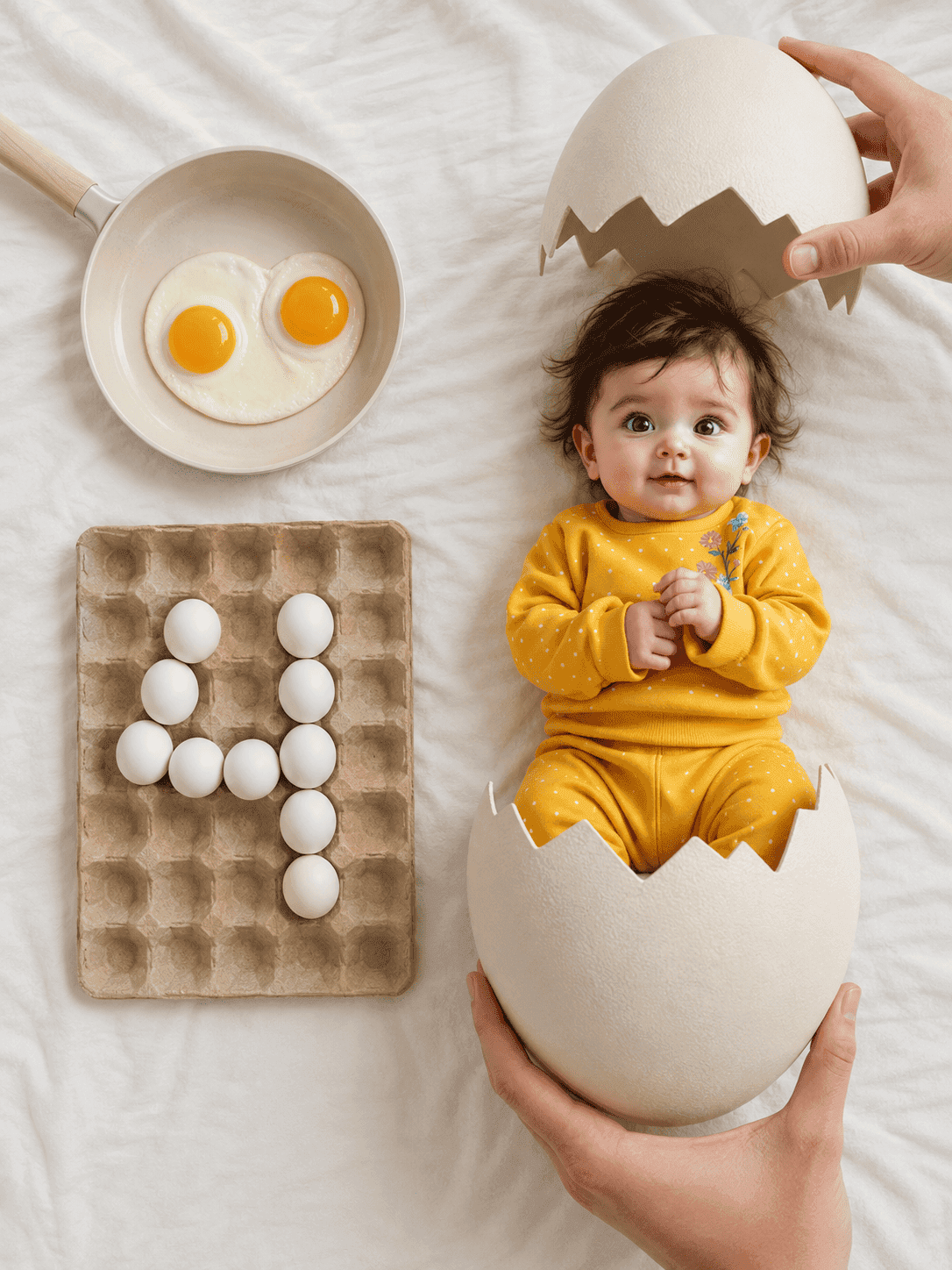
Hatching egg milestone flat lay
An overhead newborn flat lay where your baby has just hatched from a cracked egg, with the month number spelled out in eggs in a carton.
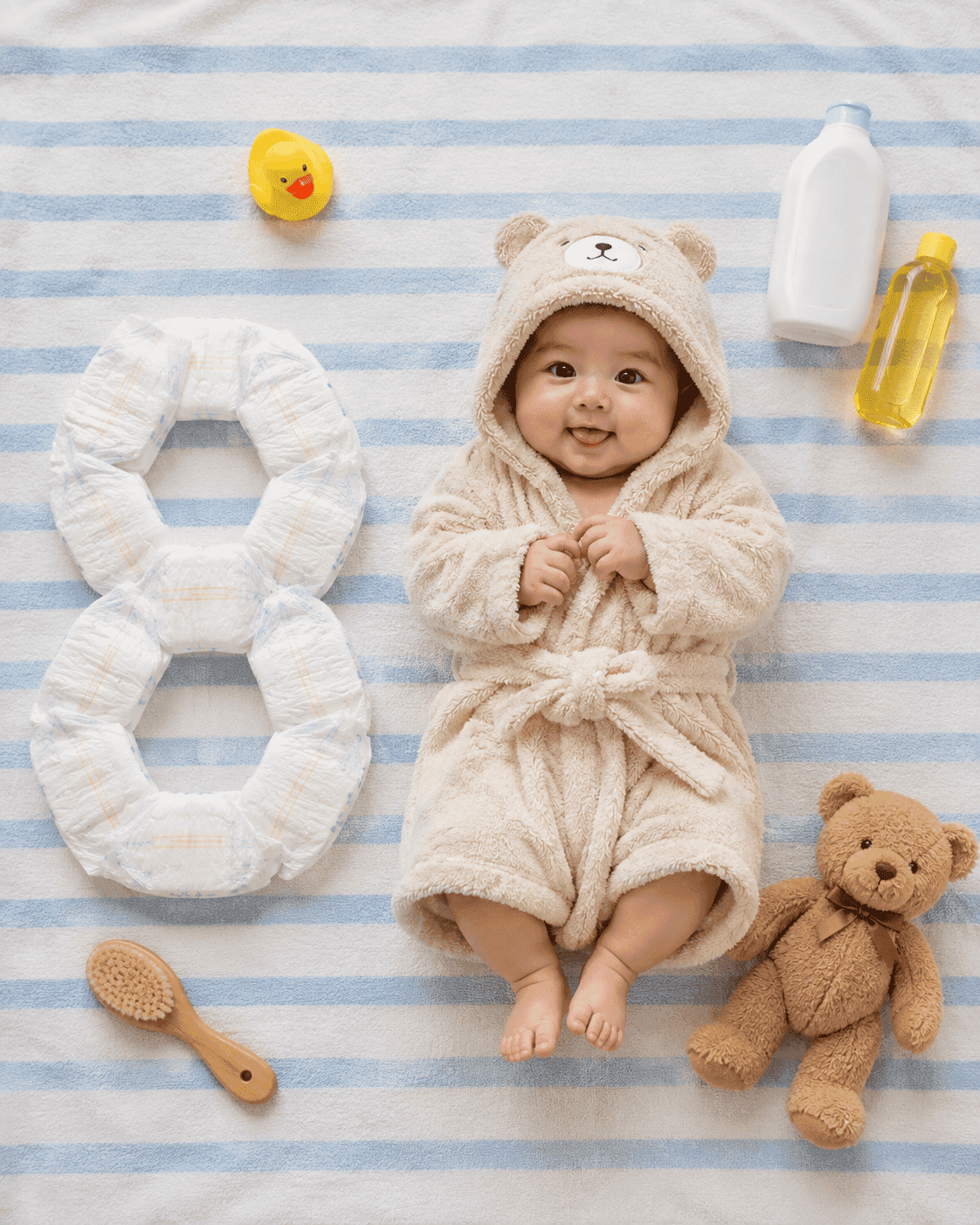
Bath essentials milestone flat lay
An overhead flat lay of your baby in a plush hooded bathrobe on a blue-and-white striped towel, with the month number built out of nappies beside them.